Preparación contra tormentas para aberturas vulnerables
Persianas para Huracanes en Ventanas, Puertas y Patios
Las persianas para huracanes ayudan a proteger aberturas vulnerables cuando amenaza el clima severo. The Shutter Pros ofrece soluciones a medida para propiedades residenciales y comerciales, incluyendo configuraciones roll-down para puertas, ventanas, patios y vanos amplios.
Solicitar una Cotización Gratis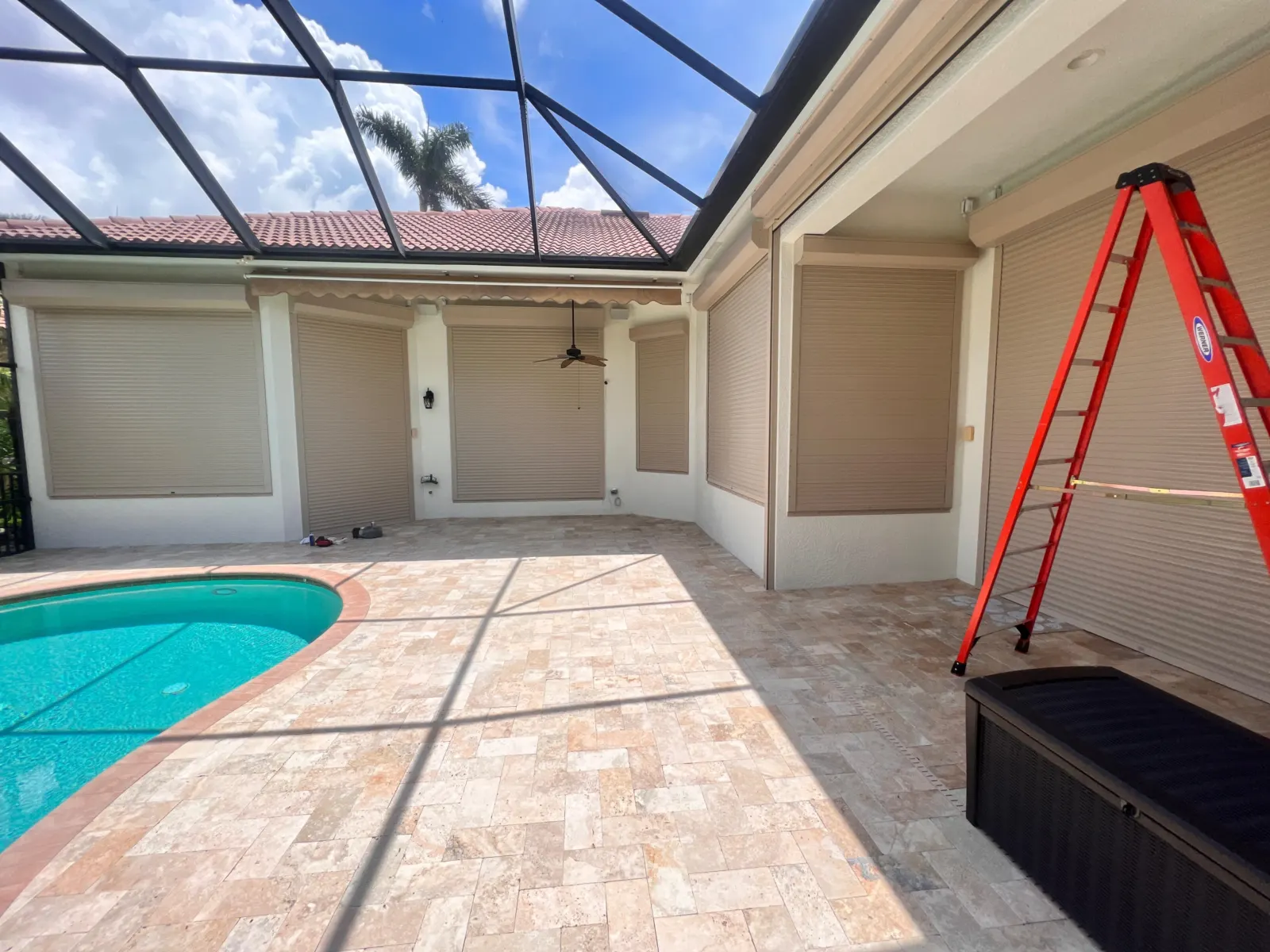
Why Opening Protection Matters
Windows, glazed doors, entryways, and wide patio openings can be vulnerable during a hurricane or strong wind event. A properly selected opening-protection system is intended to cover these areas and become part of a broader storm-readiness plan. Hurricane shutters are available in several formats, including roll-down, accordion, panel, and screen-based systems. Each format offers different deployment, storage, visibility, and installation characteristics, so the best choice depends on the building rather than on a single product label.
Convenience matters because protection only works when it can be deployed correctly and in time. Permanently installed hurricane shutters reduce the handling and storage associated with removable panels. Roll-down systems can be especially useful for large or frequently accessed openings, while other configurations may suit smaller windows or budget priorities. A complete plan should account for every opening that requires protection and should identify the sequence for closing and reopening the property safely.
Openings commonly evaluated
- Windows and sliding glass doors
- Entry and French doors
- Lanais, patios, and outdoor kitchens
- Commercial glass and service openings
Ratings, Approvals, and Project Requirements
The phrase hurricane shutter should be supported by documentation for the specific assembly being considered. Product approvals, tested dimensions, design-pressure limits, component requirements, fastening schedules, and approved substrates can determine whether a system is suitable for a particular opening. Requirements may vary by jurisdiction and building location. An installation should follow the applicable approval documents, manufacturer instructions, permit conditions, and local building requirements rather than relying on a general claim about the product family.
Accurate field information is therefore essential. The installer evaluates opening dimensions, elevation, surrounding construction, edge distances, mounting surfaces, and possible conflicts. Project design pressures or other engineering information may be needed depending on the property and jurisdiction. Property owners should retain relevant product and permit documents with their building records and understand the operating instructions for the installed system.
Choosing a Hurricane Shutter System
Start with deployment time, physical effort, storage, budget, appearance, and the shape of each opening. Manual systems may work well where the protected span is manageable. Motorized roll-down shutters can simplify closure of tall or wide openings, provided power, controls, and any available override method are planned correctly. Accordion shutters remain at the sides of an opening and close horizontally, while removable panels require labeled storage and a clear installation procedure.
Outdoor living areas often need a different approach from conventional windows. Broad spans, columns, uneven floors, furniture, water exposure, and daily circulation can influence the design. A shutter professional can divide a large area into practical sections, identify where housings and guides can mount, and explain how the system affects everyday access. Comparing options opening by opening usually produces a better protection plan than forcing one configuration onto the entire property.
Prepare Before Hurricane Season
Do not wait for a named storm to learn how the shutters operate. Close and reopen each unit during calm weather, inspect accessible parts, clear tracks, confirm that controls work, and arrange service if anything binds or appears damaged. Keep remote controls, manual tools, instructions, and installer contact details in a known location. Everyone responsible for the property should understand the safe deployment sequence and should never place hands or objects in a moving shutter path.
Hurricane shutters are one part of preparedness. Follow official evacuation and emergency guidance, maintain insurance and property records, secure loose exterior items, and plan for power interruptions. No shutter eliminates every storm risk. Proper selection, documented installation, periodic operation, and early deployment make the opening-protection system more dependable when it is needed and help owners avoid rushed decisions during an active weather threat.
Preguntas Frecuentes sobre Persianas para Huracanes
Crea un Plan Práctico de Protección contra Tormentas
Programa una evaluación para comparar configuraciones, controles, medidas y requisitos de instalación.